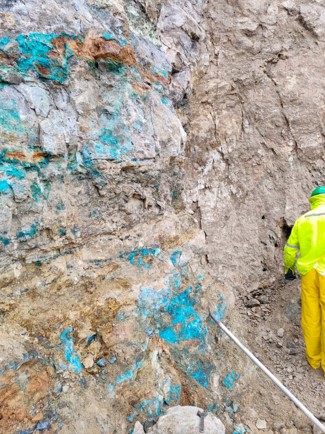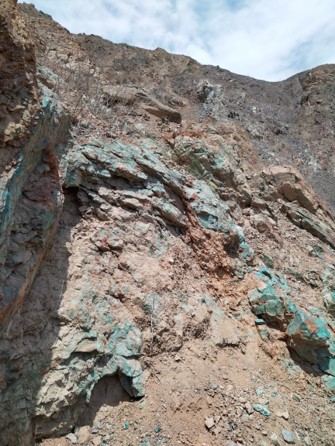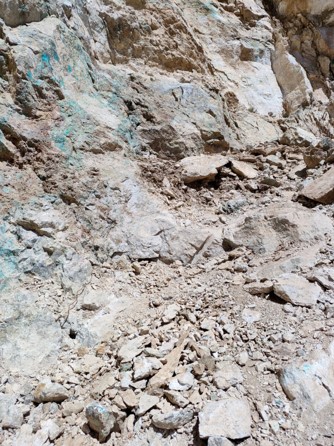
Mines Introduction
About Peru
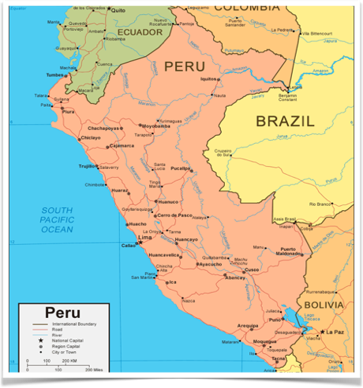
Peru is the 19th largest country in the world and the 3rd largest in South America, with a population of 32 million. Its languages are Spanish (mostly), Quechua, or other indigenous languages.
Mineral resources include: gold, natural gas, oil, copper, silver, iron ore, coal, lead, zinc, manganese, phosphorus, potassium, etc. Mining activities contribute nearly 10% of the GDP and account for 62% of total exports, making mineral exports the most important source of foreign exchange.
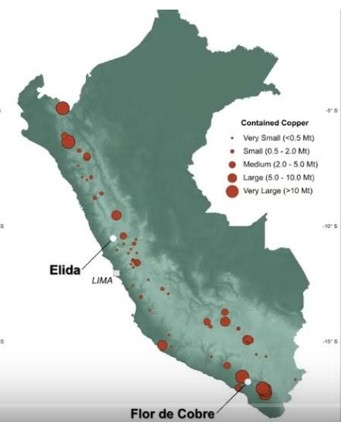
Peru is rich in copper resources, with copper (metal) reserves of 90,865 thousand tons in 2010, ranking fourth globally in copper resource distribution. The main deposits are located in the provinces of Arequipa, Huancavelica, Junín, Ancáš, Lima, Cusco, and Tacna. Copper deposits are distributed throughout the Andean magmatic arc of Peru, with the porphyry copper deposit system representing the largest deposits.
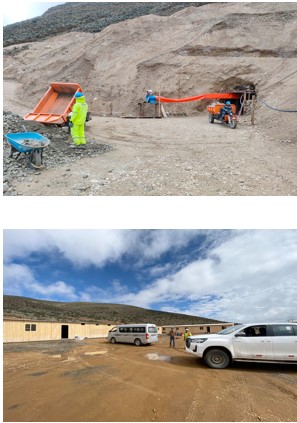
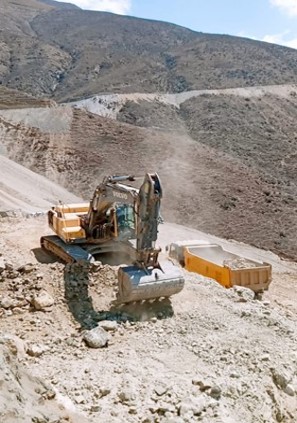
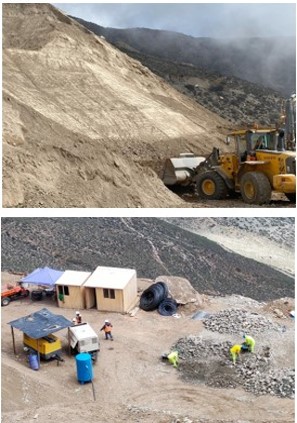
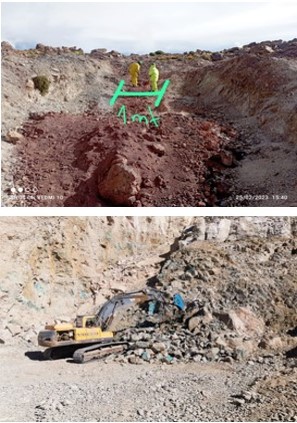
Peruvian mineral deposits are porphyry deposits located in the Pacific Ocean. Porphyry deposits are characterized by shallow burial depths, making them suitable for large-scale, mechanized open-pit mining. The mineralization is uniform, the ore has stable processing properties, and good beneficiation potential. In addition to various associated useful components such as Mo, Au, W, Sn, Pb, and Zn, elements such as Ag, Re, Co, S, Se, and Te can also be recovered.
About Zimbabwe
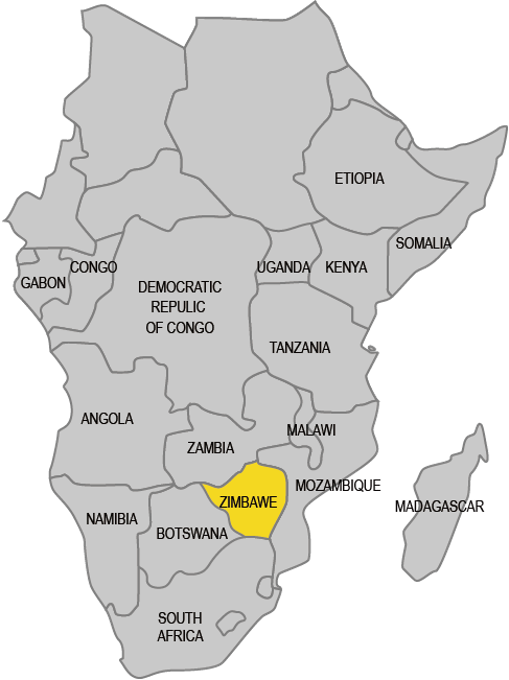
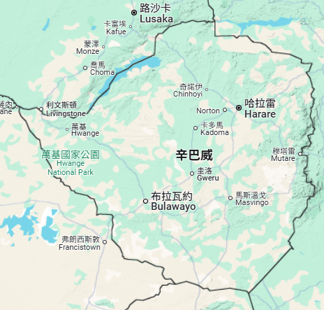
Capital: Harare; Country Area: 390,000 square kilometers; population: 16.8 million; Languages: English, Sunna, and Northern Endebelai.
Zimbabwe is rich in mineral resources, mainly gold, platinum, nickel, chromium, diamonds, asbestos, and granite, etc. Among these, diamonds, platinum group metals, chromium, gold, nickel, copper, iron ore, and coal are Zimbabwe's advantageous minerals. In recent years, with the development of the electric vehicle industry, Zimbabwe's lithium mining has also received increasing attention, making it one of the world's important lithium producers.
Detailed introduction of Zimbabwe's main mineral resources:
Gold: Zimbabwe is one of the world's major gold producers, with abundant gold reserves and a long history of mining.
Platinum: Zimbabwe is a major global producer of platinum group metals.
Chromium: Zimbabwe has abundant chromite reserves and is a significant chromium producer.
Diamonds: Zimbabwe has abundant diamond production and produces high-quality diamonds, making it a major diamond supplier.
Lithium: Zimbabwe has one of the world's largest lithium reserves, and its lithium mining potential is enormous, attracting significant investment in recent years.
Other: Zimbabwe also possesses abundant mineral resources such as coal, copper, antimony, iron, and granite.
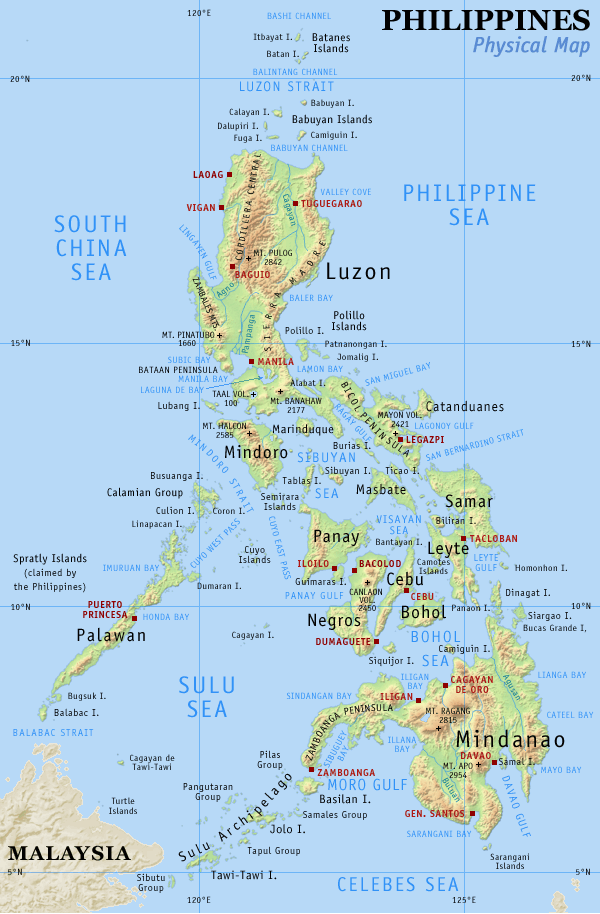
About Philippine
Capital: Manila; Country Area: 320,000 square kilometers; Population: 93 million; Languages: English, Filipino; An archipelago nation in Southeast Asia. Located in the western Pacific Ocean, it is separated from Taiwan to the north by the Luzon Strait, from Indonesia to the south by the Celebes Sea, from Vietnam to the west by the South China Sea, and borders the Philippine Sea to the east. Situated in the Circum-Pacific seismic belt, it has a tropical climate and is frequently affected by earthquakes and typhoons, possessing abundant natural resources and biodiversity. The Philippine archipelago consists of approximately 7,600 islands, divided into three main island groups: Luzon, Visayas, and Mindanao.
The Philippines has rich natural resources, ranking among the world's most mineral-rich countries, with gold, nickel, copper, and chromite as its core minerals. Approximately 87% of its mineral value comes from gold, nickel, and copper, with gold and nickel mines dominating. Its copper reserves are among the world's largest. Located within the Ring of Fire, its untapped mineral potential is enormous, primarily concentrated in Luzon, Mindanao, and Palawan.
Major mineral resources:
Nickel ore: The Philippines is a major global exporter of nickel ore, mainly located in the southern provinces of Davao Oriental, Palawan, Surigao del Norte, and Zambales.
Gold: Gold is the country’s most famous mineral, mainly primary gold deposits, which are distributed in the Baguio region, Camarines Sultanate, northern Masbate and Mindanao.
Copper ore: Vast reserves, mostly porphyry copper deposits, concentrated in Luzon and Mindanao.
Chromite: Reserves are approximately 20 million tons, making China one of the world's richest countries in chromite.
Other minerals: iron, silver, zinc, bauxite, and various non-metallic minerals (Limestone, Dolomite...etc.).
Current status of the mining industry:
High potential, low development: Despite possessing approximately 9 million hectares of land with high mineral potential, only about 5% of the reserves have been explored so far, and the level of development remains low.
Economic contribution: Mining is a key industry in the Philippines, and driven by rising mineral prices, the value of metal mining output increased by 22.8% in the first quarter of 2023.
Exports: China is one of the Philippines' major trading partners and a significant consumer of mineral products.
Challenges: Mining development faces challenges such as environmental regulations, complex administrative approval processes, and local social conflicts.